(Download this presentation The German Enigma Machine: The Secret Battlefield of WW2
or view it online)

Enigma rotors from the German Enigma machine |
For thousands of years, cryptography was a fairly simple and manual process, but the proliferation of radio messages in WW1 exposed
them all to compromise. Getting many messages using the same encipherment algorithm made the job of codebreaking very easy. In fact,
all the countries in WW1 were shocked to find that their ciphers were broken by the enemy. So we can credit WW1 for the impetus of
the next major innovation in cipher technology, the electro-mechanical rotor.
Near the end of WW1, 4 inventors from 4 countries independently invented the electro-mechanical rotor to counter the codebreaker’s
advantage of getting many cipher messages by radio. The most infamous invention was the Enigma by Arthur Scherbius of Germany. Each
rotor would mix up the alphabet and several would be arranged in series. The rotors would rotate after each character of a message,
providing a very strong and changing cipher. It also made the process of encipherment automated and user friendly. Once again, in
keeping with cryptologic tradition, this view of history will be rewritten 80 years later after the story of the real inventors of
the electro-mechanical rotor comes to light.
The first rotor cipher machine was thought to be invented in the US by Edward Hebern, a building contractor who was in jail in 1908
for stealing a horse. Apparently, he had time to think about cryptography and between 1912 and 1915 patented several cipher devices,
including a check writing device, a cipher keyboard and two electric typewriters connected with 26 wires for automatic monoalphabetic
ciphering.
Edward Hebern (1869-1952) |
|

Hebern cipher machine from NSA museum
|
Hebern built his first rotor cipher in 1917. This first cipher machine had only one rotor which could be taken out and reversed to use
in decipher mode. Hebern improved his cipher and used five rotors by 1921, when he filed for a patent and incorporated the Hebern
Electric Code Company, selling $1 million in stock. He had high aspirations for his invention and built an extravagant factory in
Oakland, California for $386,000 to employ a workforce of 1,500.
Hebern didn't realize that his cipher machine was secretly broken and blackballed by William Friedman, the US cryptanalyst who would
go on to solve the Japanese Purple cipher. Friedman pointed out a major shortcoming of the Hebern design or the design of any rotor
cipher with odometer style stepping, including the Enigma. With this design, only one rotor spins and the other rotors are fixed for
26 characters of a message, making it vulnerable to cryptanalysis. Friedman went on to invent the SIGABA cipher machine, with
its irregular stepping, which was one of the very few ciphers not broken by the enemy in WW2. Hebern only sold a few dozen machines
before going bankrupt, ending up in jail again for defrauding his investors.
Arthur Scherbius (1878-1929) |
|
First Enigma machine
|
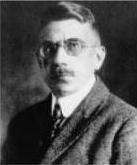
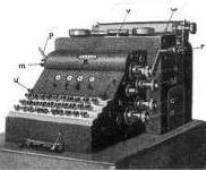
A German engineer, Arthur Scherbius, was the second inventor of a rotor cipher, which he called the Enigma machine (enigma has the
same spelling and meaning in both German and English). He applied for a patent for his electro-mechanical cipher machine on February
23, 1918. He tried to sell his machine to the German military and commercial companies, but found little interest. In 1926, Scherbius
developed his Enigma model C, reducing the weight from 110 down to 26 lbs. The German Navy bought this Enigma in February of 1926, and
convinced the German Army to do the same on June 15, 1928. The German military added a plugboard in 1930 to increase the strength of
the cipher. Scherbius died in an accident with his horse drawn carriage on May 13, 1929 without knowing the consequential role his
invention would play in world history.
Hugo Alexander Koch (1870-1928) |
|
Koch US cipher patent
|
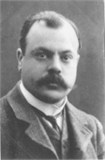
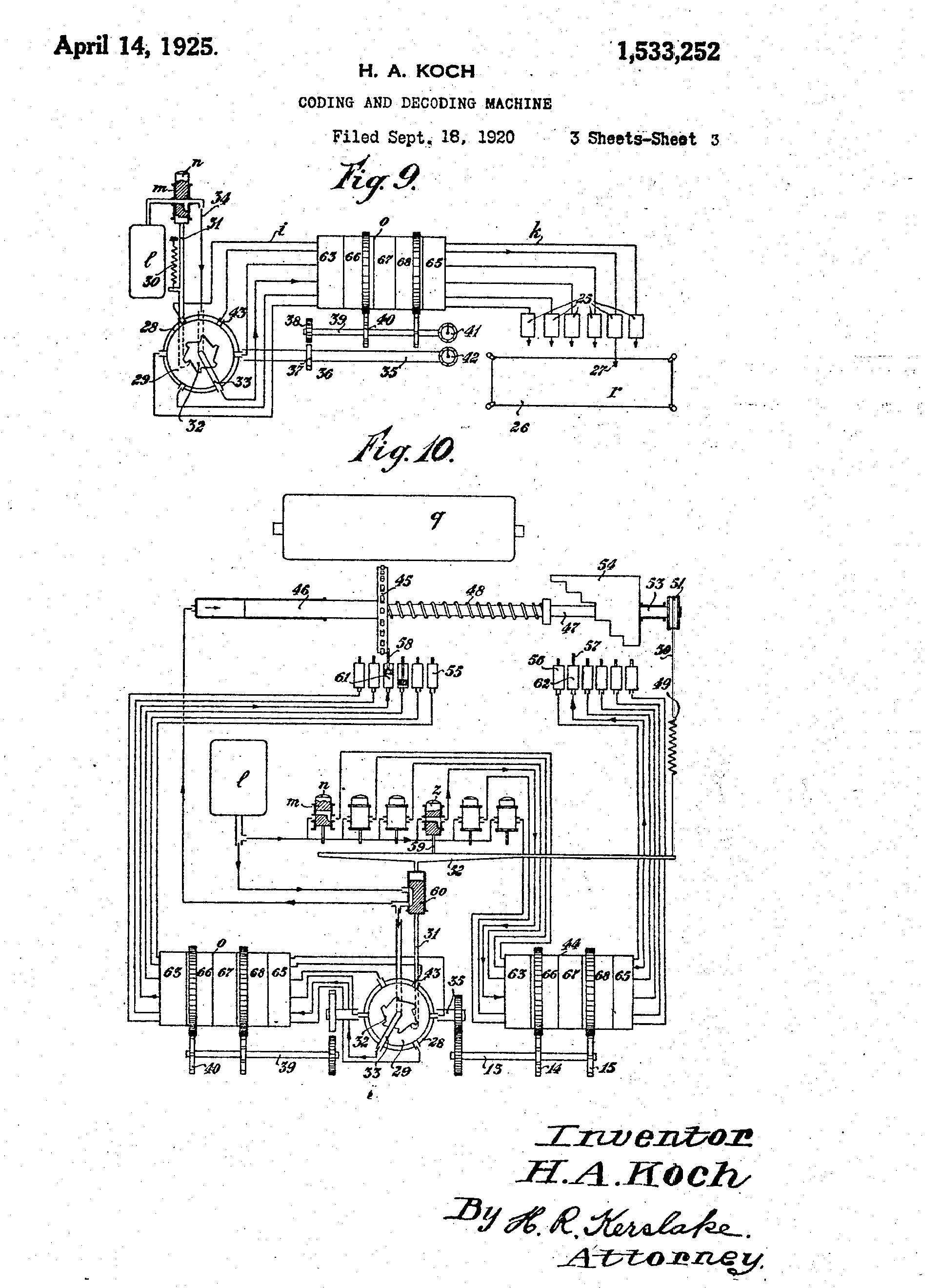
The third rotor cipher inventor was Hugo Alexander Koch, who patented his invention on October 7, 1919 in the Netherlands. He never
sold any cipher machines but instead sold the rights of his machine to Arthur Scherbius in 1927 for 600 Dutch guilders. Koch died
the following year, on March 3, 1928. Some thought Scherbius bought the Koch patents to protect his own invention, but it appeared
to be a curious purchase since the Enigma was patented first and the technology was exactly the same, down to the patent drawings.
The rest of this story finally came to light in 2003, as explained below.
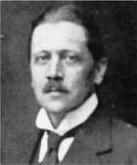
Arvid Damm (1869-1927) |
|

Damm prototype
|
The last rotor based cipher invented in this timeframe was by Arvid Gerhard Damm in Sweden. He filed his patent 3 days after Koch on
October 10, 1919. He used a double rotor with the innovation of irregular stepping, which avoided the weakness of odometer-style
stepping of the other electro-mechanical rotor ciphers. Two investors were K.W. Hagelin and Emanuel Nobel (nephew of Alfred, famous
for dynamite and awards). Hagelin had his son, Boris, join the firm in 1922 in order to protect his investment. The Swedish army made
a large purchase in 1926 and Damm died early the following year.
Boris Hagelin bought the firm and ran it, successfully developing a cipher machine with printing capability (B-211) and a handheld
cipher device. It was a later Hagelin design, the C-38 “pin and lug” cipher, which was modified by the US and made under license
from Hagelin as the M-209. Over 140,000 were manufactured during WW2, making Hagelin the first millionaire from cipher technology.
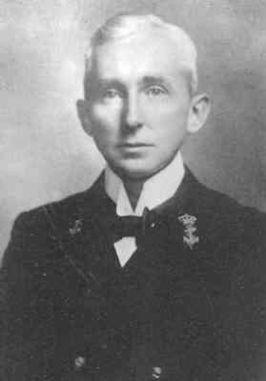
Theo van Hengel (1875-1939) |
|
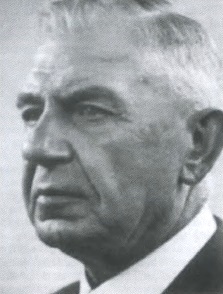
Rudolf Spengler (1875-1955)
|
In 2003, it was discovered that the rotor cipher machine was actually invented prior to the four inventions mentioned above. In 1915,
two Dutch naval officers, Theo van Hengel and Rudolf Spengler came up with the idea while working in the Dutch East Indies. They built
a prototype in the summer of 1915 but the Dutch navy decided not to adopt the cipher. Hengel and Spengler tried to patent the device
but were prohibited by the Dutch navy from publicizing their invention.
One of the patent attorneys working on the application was Huybrecht Verhagen, brother-in-law of Hugo Koch! This was undoubtedly how
Koch developed his rotor cipher patent. To add to the intrigue, Koch was already working closely with Scherbius, who made his patent
application first. This gives additional insight into why Scherbius may have bought the patent rights from Koch in 1927.
The Dutch naval officers sued Koch and despite some of the patent drawings from Koch and Scherbius being exactly the same as the
earlier Dutch drawings, the court sided with Koch and threw out the lawsuit. Now it is accepted that the electro-mechanical rotor,
including the Enigma machine, was invented by the Dutch naval officers, Hengel and Spengler.
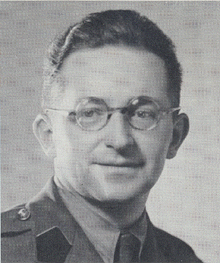
Marian Rejewski (1905-1980) |
The Polish were the first to break the Enigma code in March, 1933. They were successful by using mathematicians for the first time
as cryptanalysts, led by Marian Rejewski and, incredibly, only two part time mathematics graduate students. They got help by receiving
several months of Enigma settings from a German spy. By getting the settings, the Poles knew the Germans sent the rotor settings twice,
which they were able to exploit to break the code. They also had an easier problem to solve since the Germans only had 3 rotors and
only used 6 plugboard cables. Still, this was a remarkable achievement unmatched by any other country. They read all the Enigma
messages for over 6 years without telling their allies, not even the French who gave them the information from the German spy allowing
them to break the code in the first place.
By July, 1939, the Poles knew the Germans would soon be invading their country, so they invited the French and British to visit and
disclosed their secret codebreaking. The astonished French and British cryptanalysts took home replica Enigma machines and plans for
the machines the Poles designed to break the code, which they called a bombe, likely named after an ice cream treat.
The Polish bombe would no longer work after the start of WW2 because the Germans changed their operational procedures to send the
rotor settings only once. They also added 2 new rotors so there were now a total of 5, of which 3 were selected each day for use in
the Enigma. Also, 10 plugboard cables were now used instead of 6. Although the Polish bombe was no longer usable, the concept of
using a machine to break a cipher machine code was now proven to work.
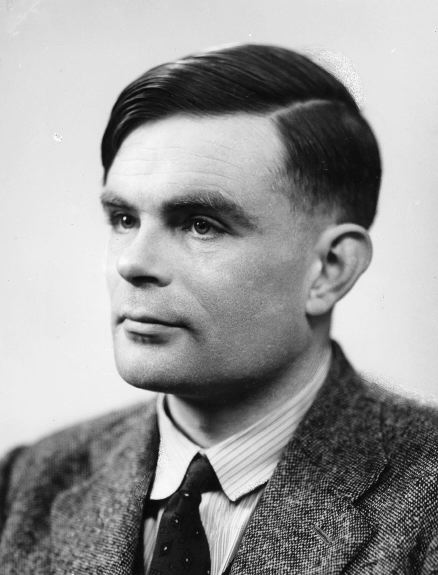
Alan Turing (1912-1954)
Father of Computing |
Alan Turing and the British decided to attack the Enigma code by using cribs, or words expected to be in a particular Enigma message.
This method was viewed to be immune to German procedural changes and exploited two design shortcomings of the Enigma, which is that
no letter can be encoded into itself and the regular odometer stepping movement of the rotors. No letter encoding to itself was a
usability feature which allowed the machine to encode or decode with the same settings. The British bombe used this fact to avoid
having to check all settings by brute force and narrow down the search to the few hundred “hits” identified by their bombe. So the
British bombe was a special purpose electro-mechanical computer.
The electro-mechanical rotor made possible a giant leap in cipher technology. The German military was so confident in the security
of the Enigma machine, for example, they ignored evidence of codebreaking. The Japanese Purple cipher was broken by the US before
Pearl Harbor and the Germans informed their Japanese ally of this situation, but the Japanese refused to accept that fact. Likewise,
the Japanese let the Germans know of their suspicions of Allied codebreaking of the Enigma, which was ignored by the Germans.
The British took extreme measures to have a plausible story of how they got any Enigma information before acting on that information.
So, if they knew the location of a U-boat based on an Enigma message, they would only act on that information by flying a spotter plane
over the U-boat first to make it appear they found the U-boat by traditional means. In one Enigma message, they knew the location of
2 U-boats being re-supplied by a mother U-boat in the mid-Atlantic and the location of 3 U-boats transiting a channel in the North Sea.
The British decided to fly a spotter plane over the mid-Atlantic U-boats and leave the other 3 alone. They did this, successfully
bombing the 2 U-boats and the mother U-boat, but by sheer luck a normal spotter plane found the North Sea U-boats and they were
successful in sinking 2 of them.
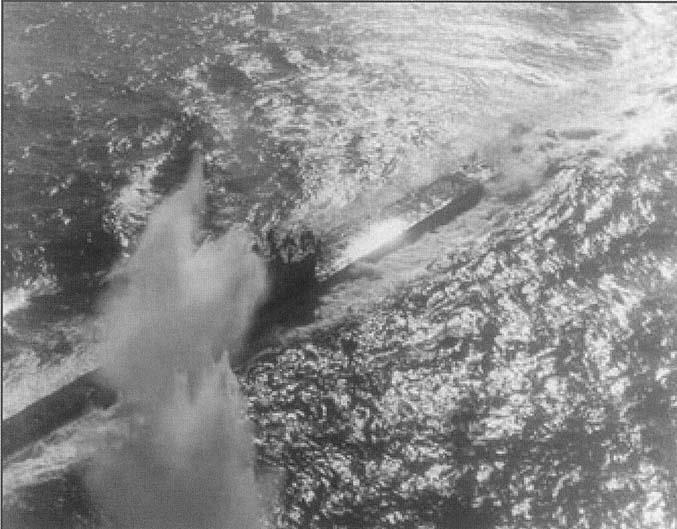
Sinking of U-117, August 1943 |
As a result of this unprecedented success against these elusive U-boats, which were identified in one Enigma message, Hitler called
a high level meeting to discuss the possibility of the Enigma machine being broken. The German codemakers described the mathematical
impossibility of breaking the code, so the Germans accepted the U-boat sinkings as a coincidence. They did not even make any changes
in their machines, procedures or planned Enigma settings. Later in the war, they assumed it was a high level of technical superiority
of British radar and sonar, or the possibility of spies, rather than suspect their ciphers were broken.
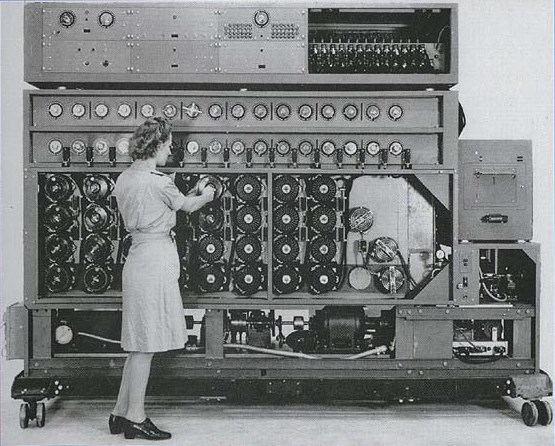
US Bombe, unit on top holds vacuum tubes for
digital memory to record rotor settings |
There was good reason for the Germans to have such faith in the invincibility of their Enigma machine. If you assume the Allies had
possession of the Enigma machine, including the wiring of all 5 rotors and the reflector (which they did), the possibility of breaking
the Enigma by brute force was still unthinkable. Assuming the Allies had 100,000 operators, each with an Enigma machine, and each one
could check a different Enigma setting every second, 24 hours a day without break, it would take twice the age of the universe to break
the Enigma code! So the German confidence in their Enigma machine was well founded.
Admiral Karl Dönitz introduced the 4 rotor Enigma in Feb. 1942 for his U-boat traffic. Some writers assumed this improvement was an
acknowledgement that the Allies had broken the 3 wheel Enigma. But when Dönitz was informed of the Allies breaking the Enigma in 1974,
he seemed genuinely surprised. Instead, he may have been changed the U-boat Enigma to protect them from the possibility of spies or
other German military services getting the settings and deciphering the messages destined for his U-boats.
The US version of the bombe was made to break the 4 rotor U-boat Enigma and added the innovation of digital memory using vacuum tubes
to store the possible hits of the Enigma settings, which were then printed off so they could be checked on an Enigma machine. The use
of memory was necessitated because the US bombe would spin the fast rotor at 1725 rpm vs the UK bombe of 50 to 120 rpm, making it
impossible to stop the rotor fast enough to write down the settings, as is done on the UK bombe.
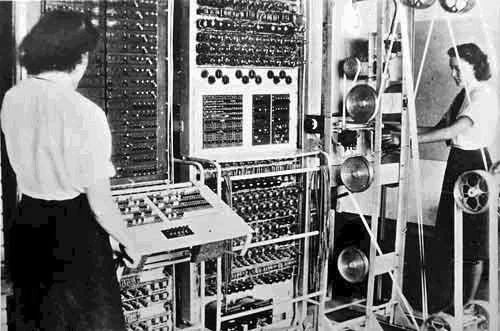
British Colossus, world’s first digital, programmable computer |
It was the German teletype cipher, the Lorenz SZ42, which forced the next innovation of the codebreakers. Tommy Flowers of the UK
Post Office designed a vacuum tube machine using 1600 tubes to break this teletype cipher. The machine Flowers designed was so large
it was called the Colossus and was the world’s first digital and programmable electronic computer.
The invention of the electro-mechanical rotor was a huge advance in cipher technology, but the strength of this technology gave the
Germans and Japanese a false sense of security in WW2. The Allies were successful in breaking these cipher machines, but only by
making major advances in the new field of computer technology. After the war, the US and UK encouraged the use of the German Enigma
machines by other countries and kept their bombes in use to decode these messages for decades. It was only after the public disclosure
of the Allied success in breaking the Enigma that the bombes were finally destroyed.
More Information on Historically Important Electric Rotor Machines
German Enigma Machine
Hebern Machine
Japanese Purple Cipher
Swiss NEMA
Electric Rotor Ciphers
from the Cipher History Museum
|
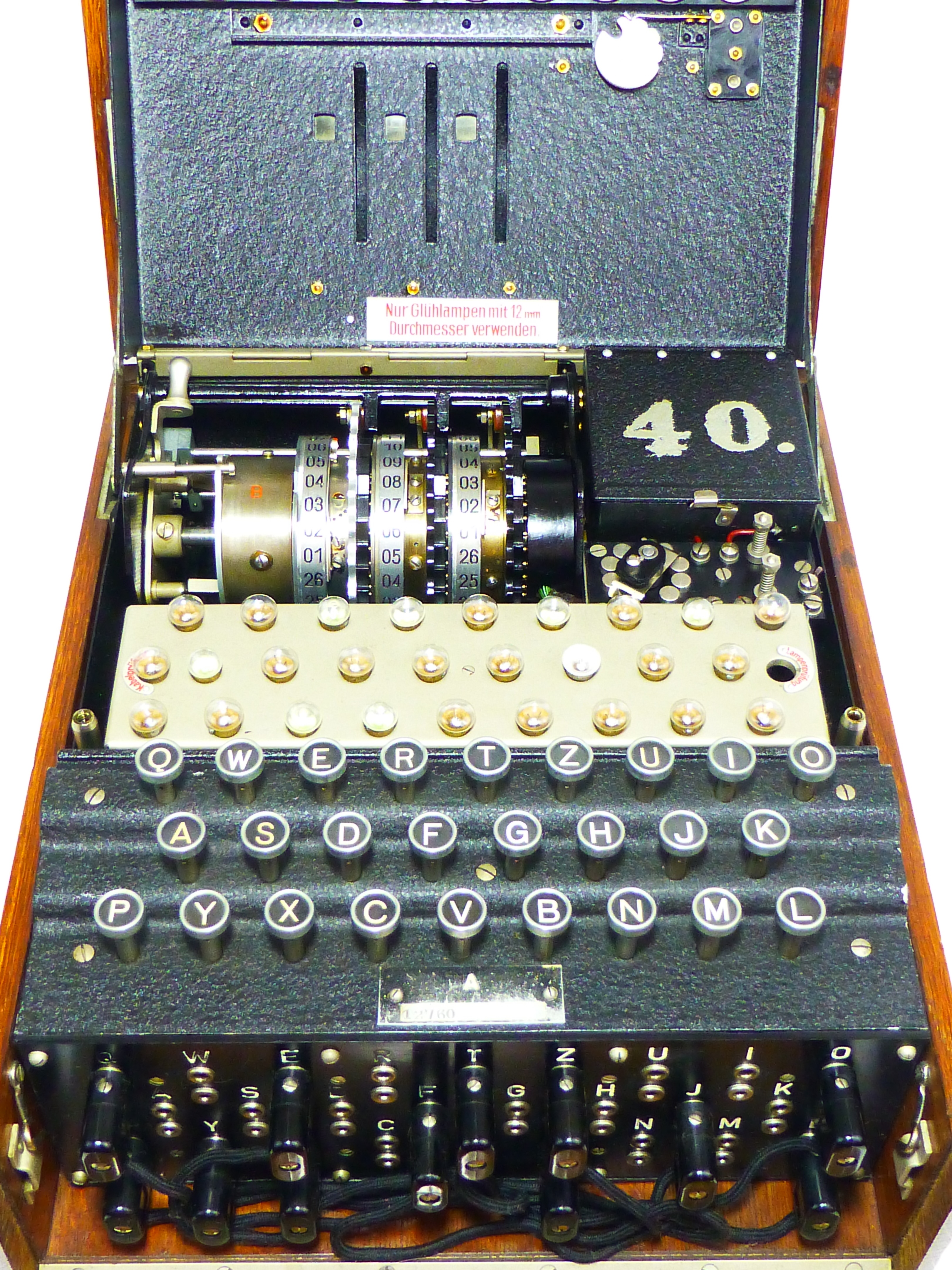
German Enigma Machine - 1941
The German Enigma machine was invented in 1918 and used in WW2 by the Nazis. It has 3 electro-mechanical rotors, a plugboard and a reflector
to mix the alphabet. The rotors turn odometer style, which changes the cryptographic algorithm for every letter of a message. This Enigma was
made in 1941 and used during the Nazi occupation of Norway during WW2.
Led by Alan Turing, the Allies made automated machines called Bombes to break the Enigma, dramatically shortening the war and ushering in the
age of modern computing. Turing was able to successfully exploit the regular, odometer style movement of the wheels and the fact that no letter
could encode into itself.
Despite 13,000 people working to break the code, this success was kept secret for almost 30 years, until 1974. Of the 35,000 Enigma machines
manufactured, only about 350 exist today. The highest price achieved for a 3-wheel Enigma machine was at an auction at Bonham’s in April 2015
for $269,000. A 4-wheel Enigma sold at Christies in December 2014 for $365,000.
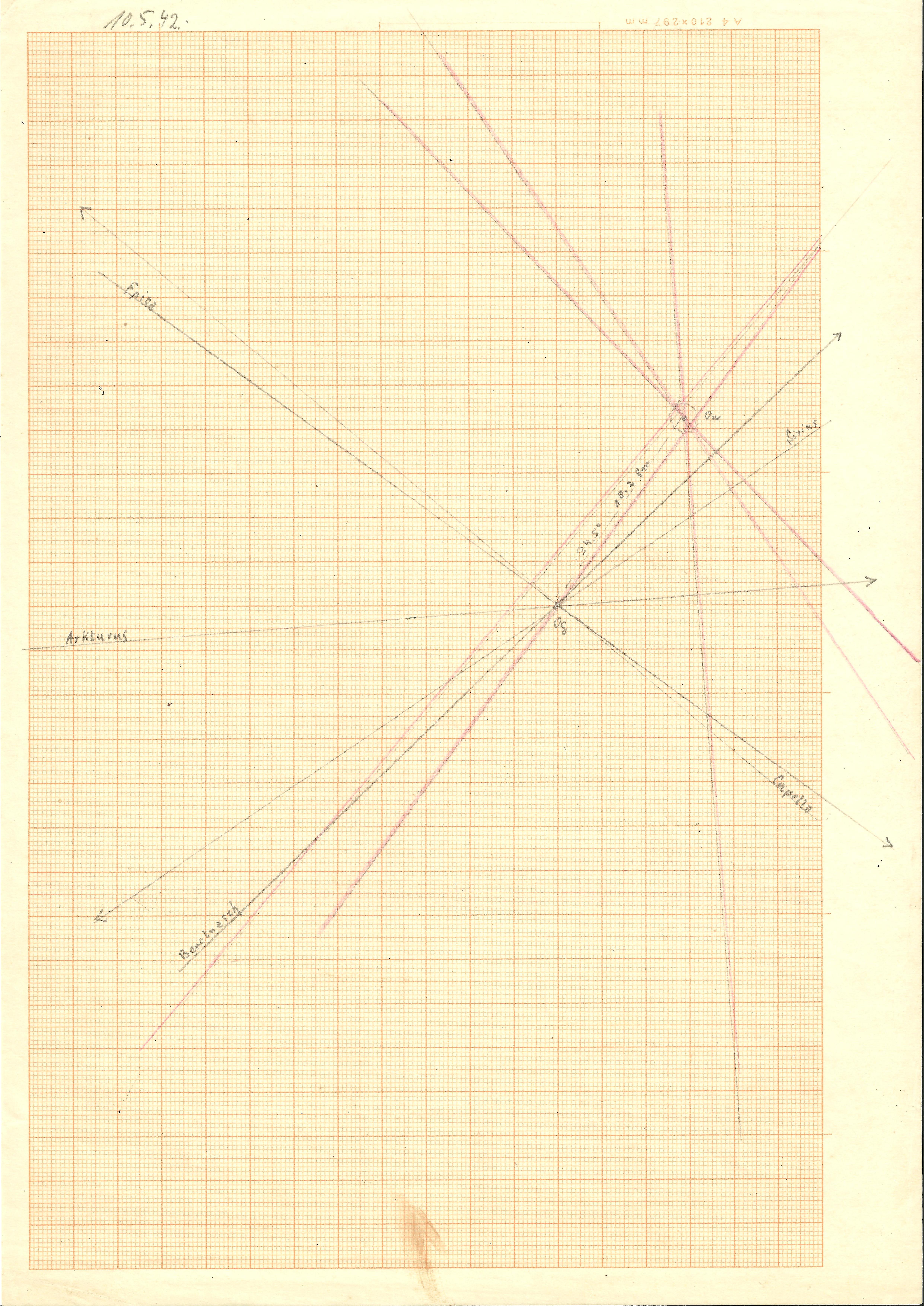
German U-Boat Navigation Plot Map from U-109 dated 5/10/1942
This original dated navigation plot sheet (11 ¾” x 8 ¼”) shows the position of German U-boat U-109 at a point during May 10, 1942 while on
its 5th War Patrol. This plot is based on celestial “star shots” made and drawn by Dieter Hengen aboard the U-109 under the command of U-boat
Captain Heinrich Bleichrodt. During this patrol, which ended June 3, 1942, the U-109 torpedoed and sank the British ship “Harpagon” on 4/20/42
about 300 miles east of Cape Hatteras. U-109 then sank the ship “Worden” and damaged the ship “La Paz” on 5/1/42, and sank the ship “Laertes”
on 5/3/42, all off of Cape Canaveral. Luckily for Hengen, he was transferred to U-255 as a watch officer in April, 1943, less than a month before
the U-109 was sunk by British aircraft. From 2/14/45 until April 1945, Hengen was the commanding officer of U-2364.
While aboard U-109, Hengen maintained a Navigation Logbook in which he recorded his sextant readings and computed the U-boat’s position almost
on a daily basis. He also drew position plots/worksheets and kept many of them loose in his Logbook. These were plotted on special printed grid
sheets with the size of the grid similar to the Kriegsmarine's Secret Atlantic Ocean Grid Chart. The U-boat’s position could then be more easily
located on the Secret Grid Chart, which was encrypted on an Enigma machine and radioed to U-boat Headquarters. This sheet is one of only a few that
had a date written on it and is an extremely rare item as very little historic, operational U-boat material has survived.
Swiss NEMA – 1947
The Swiss designed the NEMA (NEue MAschine) in 1947 to improve on some of the shortcomings of the commercial Enigma, the old machine then in use
by the Swiss Army. The NEMA has 10 rotors - 4 to mix the alphabet, 1 to act as a reflector and 5 to cause irregular stepping. Both the Commercial
Enigma and the NEMA lack the plugboard used in the Nazi Enigma.
A total of 641 were manufactured; 100 for diplomatic use, 220 for training purposes and 321 reserved for war. Each type of NEMA has a different
set of rotors. This NEMA is serial number 642, so it is the war version, as noted on the top of the lid in 3 languages, “Only deliver in case of
mobilization for war!” It is unused and has 4 additional rotors stored in the lid.
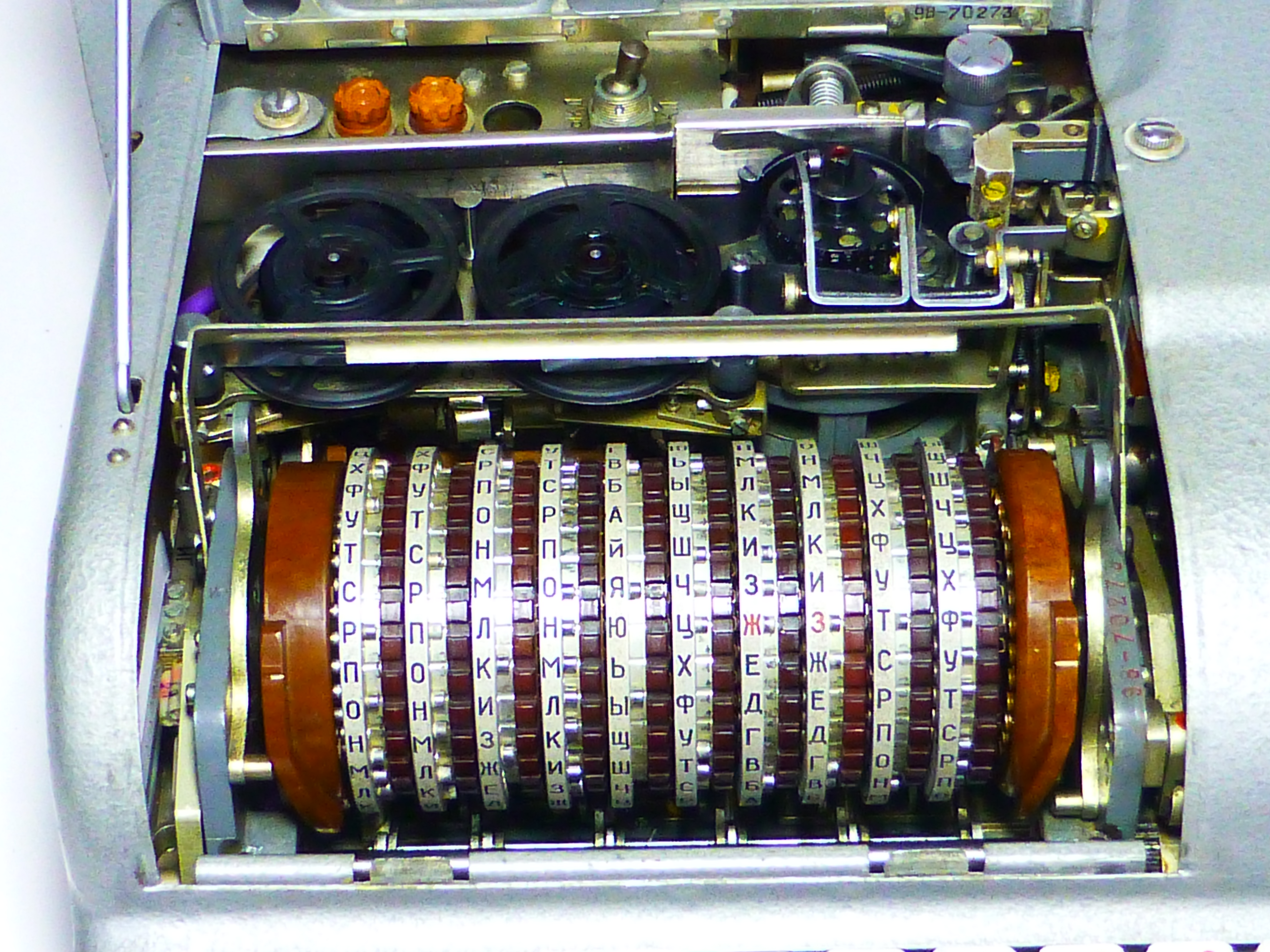
Russian M-125 Fialka - 1956-1994
The Fialka, Russian for “violet,” is a 10-wheel electro-mechanical rotor cipher, invented in 1956 and used between Russia and the Warsaw
Pact countries and some allied countries such as Cuba. Each country had a different machine with rotor wiring, keyboard and print heads
in their local language. This Fialka is from Czechoslovakia.
The rotors move irregularly and adjacent rotors spin in opposite directions. Also, the function of the Enigma plugboard is performed by a
punched card. The Fialka can print output or punch Baudot 5-level tape for sending to a teletype. The Fialka was used until the fall of the
Soviet Union in the early 1990s, but its existence wasn’t publicly known until 2005.